METEO RWANDA Strengthens Institutional Collaboration to Advance Impact-Based Early Warning Systems
METEO RWANDA is strengthening collaboration among government institutions, sector stakeholders and communities to enhance the effectiveness of impact-based early warning systems and ensure that weather information translates into timely, informed and practical action.
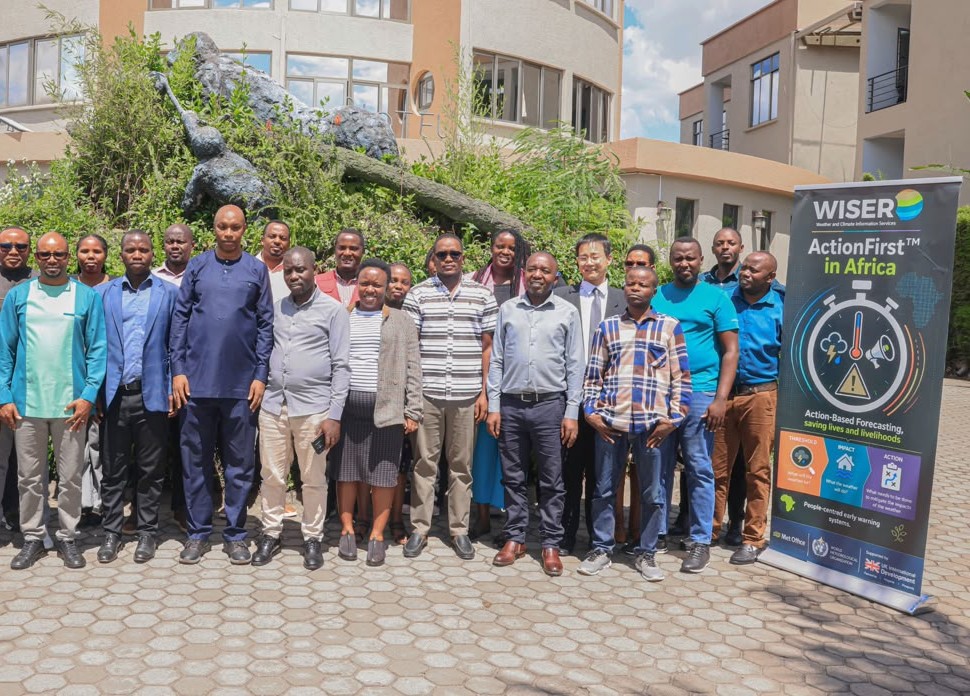
This was highlighted during the five-day WISER ActionFirst Technical Working Group Workshop on Co-Production Training on Early Warning Systems and Impact-Based Early Warning, held in Musanze from 16 to 20 November 2026. The workshop was convened by METEO RWANDA under the WISER ActionFirst programme, supported by the Foreign, Commonwealth and Development Office (FCDO), the UK Met Office and the World Meteorological Organization (WMO).
The workshop brought together representatives from government institutions, disaster management agencies, sector stakeholders, the media and other partners to strengthen the co-production of early warning information, identify sector-specific needs and advance coordinated preparedness and anticipatory action.
Discussions underscored the importance of moving beyond conventional weather forecasts towards impact-based warnings that communicate what is expected to happen, where and when it may occur, who is at risk and what actions should be taken to reduce potential impacts.
Participants reviewed Rwanda’s progress in strengthening its early warning system, including monitoring infrastructure, hazard monitoring, warning dissemination and institutional coordination. They also identified areas requiring further attention, including last-mile dissemination, data sharing, interoperability, local capacities and feedback mechanisms to improve the reach and effectiveness of warning messages.
The workshop featured sectoral discussions involving stakeholders from health, infrastructure, mining, tourism, agriculture, media, gender and disability, highlighting the need for tailored weather and climate information to support decision-making across different sectors.
A key focus of the training was strengthening Rwanda’s forecast-to-action value chain, recognising that an effective early warning system goes beyond producing accurate forecasts. It requires risk knowledge, monitoring and forecasting, effective warning communication and dissemination, as well as the capacity of institutions and communities to take timely and appropriate action.
Through a co-production approach, participants examined how warnings are generated, communicated, received, interpreted and acted upon at district and community levels. They also identified the information needs of different users, including farmers, local authorities, emergency responders and vulnerable groups.
Sector-specific discussions highlighted practical information needs. The mining sector, for instance, emphasized the importance of rainfall intensity, short-term rainfall accumulation and slope-related information to support risk management. Agriculture stakeholders highlighted the need for seasonal, 10-day and short-range forecasts to inform crop and livestock management, while tourism stakeholders underscored the importance of destination-specific weather services. The media also reaffirmed its role in communicating timely, understandable and accessible warning messages to the public.
Community participation and inclusive dissemination emerged as key priorities throughout the workshop. Participants highlighted the need to strengthen communication through community volunteers, radio, local authorities, house-to-house outreach and accessible messaging formats, while ensuring that women, persons with disabilities and other vulnerable groups receive and understand warnings in time to take action.
Discussions also emphasized integrating gender equality and social inclusion into early warning planning, implementation, budgeting and monitoring, alongside stronger feedback mechanisms to assess whether warnings reach intended audiences and support informed decisions.
Testing the forecast-to-action process
The participants put the knowledge and approaches discussed during the training into practice through a scenario-based simulation exercise involving a heavy rainfall and multi-hazard event affecting selected districts.
Working in teams, participants assessed potential risks, identified appropriate warning and communication channels, translated technical forecasts into localized messages and proposed pre-emptive actions, including evacuation and measures to protect vulnerable populations.
The simulation helped identify operational gaps, including delays in translating forecasts into local-level action, challenges in mobilizing resources for anticipatory measures and gaps in last-mile verification of warnings. The lessons will inform efforts to strengthen coordination and operational readiness across the forecast-to-action value chain.
Key outcomes and next steps
The training contributed to the development of draft Action-Based Forecasting products, operational workflows defining institutional roles and communication pathways, and a draft Rwanda ActionFirst Plan outlining priority actions, institutional responsibilities and capacity development needs.
Strengthening impact-based early warning systems remains an important contribution to Rwanda’s disaster risk reduction, climate resilience and preparedness efforts. By enhancing collaboration and ensuring that timely, relevant and accessible information leads to appropriate action, these efforts will help institutions, communities and citizens protect lives, livelihoods and development gains.
The engagement forms part of the WISER ActionFirst initiative, implemented through collaboration involving METEO RWANDA, the UK Met Office and the World Meteorological Organization (WMO), among other stakeholders. The initiative supports Rwanda’s broader efforts to strengthen people-centred, impact-based and action-based early warning systems.