Rwanda uses CMAS 2026 to advance Carbon Markets, Climate Finance and Green Growth
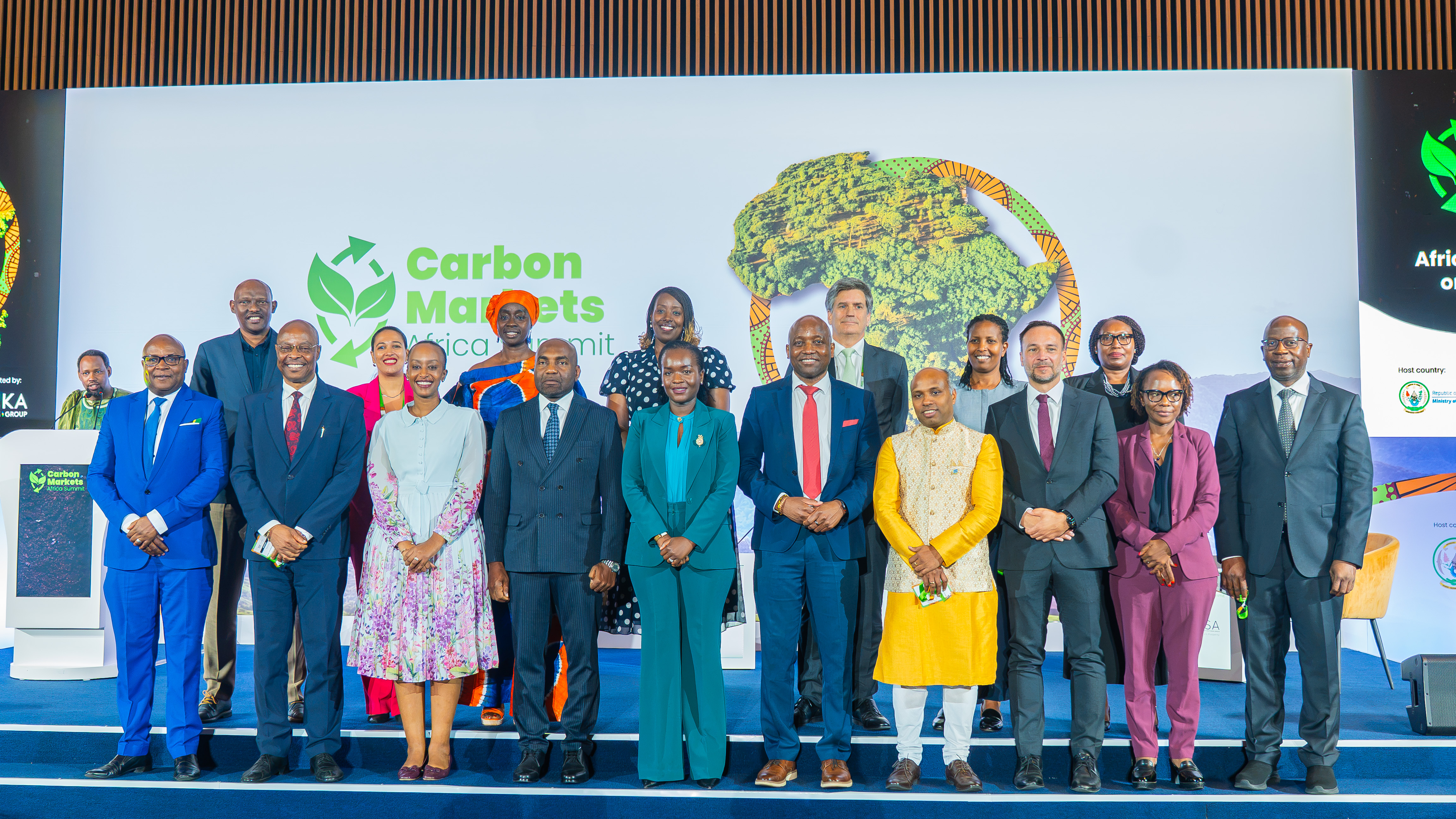
Hosting CMAS 2026 reflects confidence in Rwanda’s progress in developing carbon market regulations and its ambition to help shape Africa’s climate finance future.
Since launching its National Carbon Market Framework in 2023, Rwanda has established procedures for implementing Article 6 of the Paris Agreement, developed a national carbon registry and introduced independent verification requirements. Ministerial instructions issued in January 2026 further clarified fees and benefit-sharing arrangements.
The summit brings together governments, project developers, investors, carbon credit buyers and development finance institutions to strengthen partnerships and move projects towards implementation. It is hosted with the United Nations Development Programme (UNDP) and the African Development Bank, with the Development Bank of Southern Africa and AUDA-NEPAD as partners.
For Rwanda, the goal is clear: translate carbon market opportunities into measurable climate and economic benefits.
Carbon markets and Rwanda’s green growth agenda
Carbon markets support Rwanda’s climate commitments and green growth ambitions under Vision 2050. However, their value extends beyond emissions reductions.
The country wants projects to deliver wider benefits, including land restoration, job creation, stronger community resilience and improved livelihoods.
Although Rwanda contributes relatively little to global greenhouse gas emissions, it remains vulnerable to climate-related disasters. In May 2023, floods and landslides in the Western, Northern and Southern provinces claimed more than 130 lives and destroyed homes, roads and crops.
Investments in restored hillsides, protected wetlands and improved drainage can help communities withstand future climate shocks.
Carbon finance can also support cleaner economic growth. Electric mobility can reduce reliance on imported fossil fuels and improve urban air quality, while clean cooking and renewable energy can lower household costs and ease pressure on forests.
Mobilizing investment and creating green jobs
Carbon credits can generate revenue from verified emissions reductions or removals, helping finance projects that might otherwise struggle to attract investment.
According to figures provided for this article, Rwanda’s Environment Management Authority (REMA) has registered 29 carbon market projects covering land restoration, agriculture, forestry, electric mobility, waste management and renewable energy. Carbon credit sales have generated approximately US$1.5 million.
Rwanda’s Article 6 cooperation agreement with Singapore also provides a framework for authorized projects to access international buyers.
The opportunities extend to employment. Carbon projects can create jobs in tree planting, land restoration, clean cooking, electric mobility, waste management and the measurement and verification of emissions reductions.
These activities can build local skills and expand economic opportunities in rural communities as well as urban centres.
Across Africa, the African Union’s Action Plan on Carbon Markets provides a shared direction, while institutions such as the African Development Bank and the Development Bank of Southern Africa are working to support investment and mobilize private capital.
Ensuring communities share the benefits
For carbon markets to deliver lasting value, communities hosting projects must benefit directly.
Rwanda’s January 2026 Ministerial Instructions provide for 30 per cent of carbon market revenues from qualifying land-based projects on farmers’ or public land to go to communities and landowners.
Beyond revenue, projects can deliver practical improvements. Clean cooking reduces household smoke and firewood collection, while land restoration can improve soil quality, protect water resources and strengthen resilience to climate change.
Transparent benefit-sharing arrangements are therefore essential to ensuring that carbon finance supports local development rather than benefiting only investors and project developers.
Protecting carbon market integrity
Strong safeguards are critical to ensuring that carbon markets deliver genuine climate benefits.
Under Article 6 of the Paris Agreement, authorized international transfers of mitigation outcomes are subject to government approval, tracking and corresponding adjustments where applicable. These measures help prevent emissions reductions from being counted more than once towards national climate targets.
Article 6 also includes provisions to support overall mitigation of global emissions.
Carbon credits should complement, not replace, efforts by countries and companies to reduce their own emissions. Reliable verification, transparent registries and effective government oversight are essential to maintaining market confidence.
For African countries, clear regulations and fair contractual terms can also strengthen negotiating power and help ensure that more of the value generated by carbon projects benefits local economies.
From dialogue to delivery
CMAS 2026 aims to turn discussions into practical outcomes in four key areas:
Project development: Connect credible projects with investors and buyers to accelerate implementation and carbon credit issuance.
Climate finance: Secure investment commitments and expand blended finance to help early-stage projects attract private capital.
Policy alignment: Strengthen cooperation on Article 6, national registries and emissions measurement and verification.
Community benefits: Advance commitments on revenue-sharing, local employment and skills development.
Achieving these outcomes will require transparent regulations, predictable fees, reliable registries and investment in African technical expertise. Countries must also share information on carbon credit prices and contractual terms to negotiate more effectively.
Measuring success beyond Kigali
The summit’s success will ultimately depend on measurable results, not announcements alone.
Key indicators should include the number of projects reaching credit issuance, the amount of finance mobilized, revenues reaching communities and jobs created.
Tracking these outcomes over the following year would help demonstrate whether commitments made in Kigali are translating into tangible benefits.
For Rwanda and its African partners, the broader ambition is to build carbon markets that are environmentally credible, economically viable and socially inclusive.